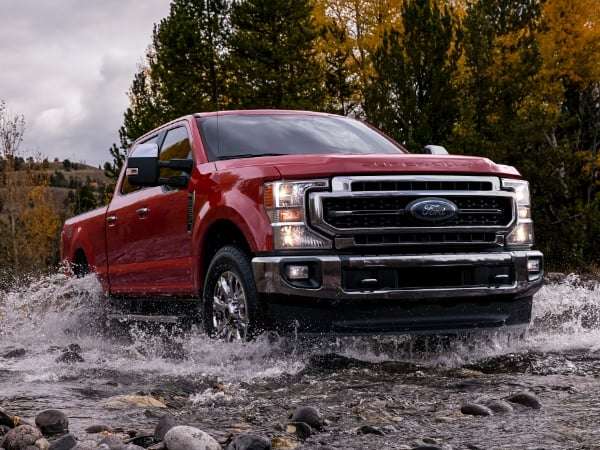
Deleting the DPF on a 6.7 Powerstroke is a straightforward weekend job for a mechanically capable owner with the right tools, the right kit, and a methodical approach. The process involves removing the factory DPF section from the exhaust, blocking off the EGR system, capping the DEF/SCR system, and flashing the ECM with a delete tune that tells the truck those components are no longer there. Done properly, you'll pick up 3-5 MPG, eliminate regen cycles forever, and end up with a 6.7 Powerstroke that runs the way Ford's engineers wished they could have built it. Here's exactly how to do it.
Step 1: Confirm Your Year and Configuration
The 6.7 Powerstroke has been in production since 2011 and went through three significant emissions configurations: 2011-2014, 2015-2019, and 2020+. Each one uses different hardware, different tune files, and slightly different procedures. Before you order a single part, confirm exactly what year and configuration you have. Look at the build sticker in the driver's door jamb to verify the model year and emissions package.
Things to write down before ordering:
-
Exact model year (the 2011 vs 2012 mid-year split matters)
-
Cab and bed configuration (affects exhaust pipe length)
-
Whether you have a CCV reroute or factory configuration
-
Current mileage and any existing modifications
If you need to call us with a fitment question, take photos of your truck's exhaust system, EGR area, and DEF tank before you order - those photos save 20 minutes of guessing on the phone.
Step 2: Gather Your Tools and Parts
You're going to need real tools, not the budget set from the big-box store. The 6.7 Powerstroke uses a mix of metric and SAE fasteners, and several of the exhaust bolts will be seized after years of heat cycling.
Tools you'll need:
-
3/8" and 1/2" drive socket sets (metric and SAE)
-
Long-handled breaker bar
-
Penetrating oil (PB Blaster or Kroil)
-
Sawzall or angle grinder with cutoff wheel
-
Floor jack and jack stands rated for the truck's weight
-
Torque wrench
-
Heat-resistant gloves
-
An assistant for the heavy exhaust sections
Parts you'll need from a complete delete kit:
-
DPF delete pipe (4-inch or 5-inch stainless)
-
EGR delete kit with block-off plates and gaskets
-
DEF/SCR delete kit with all caps and plugs
-
Tuner with the correct delete tune file for your year
-
New exhaust gaskets and clamps
-
Coolant for refilling after the EGR work
Pro tip: Order all your hardware as a single bundle rather than piece-by-piece. A matched set from one source means you're not chasing down which DPF pipe mates to which downpipe — and if something doesn't fit, you've got one phone call to make instead of three. Our 6.7 Powerstroke delete bundles are organized by year specifically for this reason.
Step 3: Prep the Truck
Park on a flat, level surface with plenty of room to work. Concrete is ideal. Disconnect the negative battery terminal - both batteries on the 6.7 Powerstroke. Let the truck cool completely. Exhaust components retain heat for hours after running, and aluminum bell housings on a hot truck will burn through gloves.
Pro tip: Spray every exhaust bolt, every band clamp, and every nut you can see with penetrating oil - then walk away and come back in 24 hours and spray them again. This single step separates an 8-hour delete from a 14-hour delete with broken studs and a trip to the parts store. The guys who skip this are also the guys who end up extracting bolts.
Lift the truck with a floor jack at the factory jack points and support it with proper jack stands. Never work under a truck supported only by a jack. Chock the rear wheels even if the parking brake is set.

Step 4: Remove the DPF Section
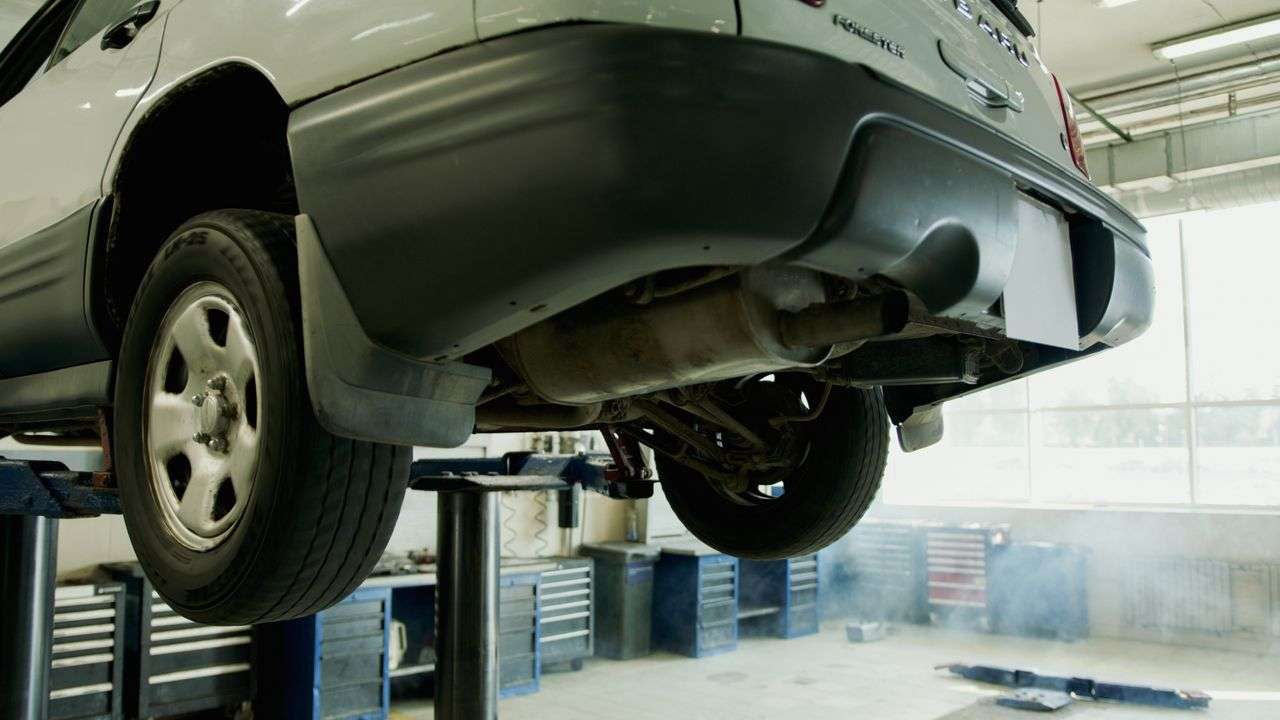
The DPF on a 6.7 Powerstroke sits in the exhaust between the turbo downpipe and the muffler. It's heavy - the assembly typically weighs 60-80 pounds - and it's awkward to handle alone.
Disconnect all the sensors going into the DPF assembly: the upstream and downstream pressure sensors, the EGT sensors, and the soot sensor wiring on later models. Label each connector with masking tape if you're new to this. The harness connectors are similar but not identical, and a misrouted sensor on reassembly will throw codes immediately.
Loosen the V-band clamps at the front and rear of the DPF section. These often need persuasion - a few sharp taps with a hammer on the clamp body before loosening will help break the corrosion bond. Once free, support the DPF with one hand while removing the last bolts. Have your assistant ready to take the weight as it drops.
Pro tip: Don't throw the factory DPF in the scrap pile. Used factory DPF assemblies in good condition sell for $200-500 to fleets and shops that need OEM replacements. That's real money back in your pocket and worth a quick listing on a forum classifieds section before you decide what to do with it.
Step 5: Install the DPF Delete Pipe
The delete pipe should bolt directly into the space the DPF occupied. Slip it into position, hand-tighten the V-band clamps at both ends to allow for alignment, then walk the truck and check that the pipe sits centered and isn't contacting the frame, transmission lines, or fuel lines anywhere along its length.
Once you're satisfied with the alignment, torque the V-band clamps to the spec listed in your kit's instructions - usually 89-100 in-lbs for the front clamp and similar for the rear. Don't gorilla-tight these. Over-torqued V-bands warp and leak. Spray the V-band clamp threads with high-temp anti-seize before final torque so the next time you need to touch this exhaust, you're not fighting it.
Step 6: Block Off the EGR System
This is the most involved step on the 6.7 Powerstroke and where most first-timers slow down. The EGR cooler and valve sit on top of the engine, partially under the upper intake manifold on early trucks.
Drain the coolant from the radiator petcock into a clean catch pan - you'll be reusing it if it's clean. Remove the upper intake plenum (this requires removing several sensor connections and bolts; the factory service manual is genuinely helpful here). With the upper intake out of the way, the EGR cooler is accessible.
Disconnect the coolant lines feeding the EGR cooler - have rags ready, residual coolant will leak out. Unbolt the EGR valve from the intake manifold and the EGR cooler from its mounting bracket. Remove the entire assembly from the truck.
Install the EGR delete plates from your kit. The intake manifold side gets the larger plate with new gaskets. The exhaust side gets the smaller block-off. Run the supplied coolant bypass hose between the two ports that previously fed the cooler. Torque all bolts to spec - over-torquing the intake plate will crack the manifold.
Reinstall the upper intake with new gaskets (always use new gaskets here; the factory ones are single-use). Refill the coolant system slowly to avoid air pockets, and run the truck briefly with the radiator cap off to bleed air before final top-off.
Pro tip: While you have the upper intake off, take five minutes to clean the intake runners with a shop vac and a long brush. The carbon buildup on a 100K+ mile EGR-equipped engine is significant - we've pulled handfuls of caked soot out of trucks that owners thought were "running fine." Removing it now means your delete will run noticeably better from day one and you won't have to come back in for it later.
Step 7: Cap the DEF/SCR System
The DEF system on the 6.7 Powerstroke involves the DEF tank, the DEF injector at the SCR catalyst, the NOx sensors, and all the associated wiring and lines. A proper DEF delete kit caps the system rather than removing it entirely - most owners leave the DEF tank physically in place to preserve the factory appearance and avoid bodywork.
Disconnect the DEF injector from its harness and from the exhaust. Cap the injection port with the supplied plug from your kit. Remove and cap the NOx sensors at both their physical locations and their harness connections (the tune will tell the ECM to ignore them). The DEF heater and pump can be left in place but disconnected - if you want a cleaner install, pull the pump module from the tank.
The factory exhaust may have an SCR catalyst section that needs to come out depending on your specific year. If your delete pipe didn't already replace this section in Step 5, address it now. Tape over any disconnected DEF connectors to keep them clean - if you ever revert to stock, intact connectors save real money.
Step 8: Flash the Delete Tune
This is the step that turns a pile of disconnected sensors into a working truck. Without the tune, the ECM will see all the missing components, throw a wall of codes, and put the truck into limp mode within a few miles.
Connect your tuner to the OBD-II port under the dashboard. Follow the tuner's specific instructions - every platform is slightly different, but the general process is: read the stock file (back it up), select the appropriate delete tune for what you've physically removed, and flash it to the ECM. This typically takes 10-20 minutes and absolutely cannot be interrupted.
Pro tip: Hook up a battery maintainer or trickle charger to both batteries before you start the flash, and don't skip this step. Voltage drop mid-flash is one of the very few things that can genuinely brick a 6.7 Powerstroke ECM, and replacing one runs $2,500-3,500 with programming. A $40 charger and ten extra minutes of setup is the cheapest insurance you'll ever buy.
Step 9: Start, Verify, and Road Test
Reconnect the batteries. Turn the key to the run position (not crank) and let the dash cycle through. Watch for any immediate warning lights. Crank the engine - it should fire quickly and settle into a smooth idle. If it doesn't, shut it down and recheck connections before troubleshooting.
Let the truck idle for 5-10 minutes while you walk around it. Check for exhaust leaks at every connection point you touched. Check for coolant leaks at the EGR delete area. Listen for any unusual sounds.
Take the truck for a short test drive - start with an easy 10-15 mile loop with a mix of stop-and-go and highway. The truck should feel smoother, throttle response should improve immediately, and you should not see any check engine lights. If a code does pop up, scan it with a basic OBD-II reader and address the specific issue rather than ignoring it.
Check your fluid levels again after the first drive cycle - coolant level especially. Air pockets in the cooling system often work their way out during the first heat cycle, and you may need to top off coolant after the first 50-100 miles of driving.
How Long Does the Job Take?
For an experienced installer working alone with all parts on hand, a complete 6.7 Powerstroke delete (DPF, EGR, DEF, and tune) is a 6-9 hour job. For a first-timer working carefully and reading instructions, plan on 12-16 hours spread across a weekend. Don't try to compress this into a single afternoon - rushed work on emissions equipment is how studs break and bolts get cross-threaded.
When to Call a Professional
If you've made it through this guide and any of these apply to you, this is a job worth paying a shop to handle: you don't have a torque wrench or aren't sure how to use one, you've never disconnected a fuel or coolant line, you don't have a way to safely lift and support a 7,000-pound truck, you're not comfortable using a Sawzall or angle grinder around fuel lines, or the truck is your only vehicle and you can't be without it for a weekend.
A reputable diesel shop will charge $800-$1,500 for installation labor on a delete you've supplied the parts for. Compare that to the cost of a botched DIY job and the math often works in favor of professional installation, especially for first-time deleters.
The Bottom Line
A 6.7 Powerstroke delete is one of the most rewarding modifications you can do to a Ford diesel. The truck runs better, gets better fuel economy, and stops fighting itself with regen cycles and emissions-related limp modes. With the right kit, the right tools, and a methodical approach, it's well within reach of a mechanically capable owner - and if you'd rather have a shop handle it, the work itself is straightforward enough that most diesel shops can knock it out in a day.
If you're ready to start ordering parts, our 6.7 Powerstroke delete collection is organized by year range with everything you need bundled in one box - DPF delete pipe, EGR delete kit, DEF delete kit, and your choice of tuner, all matched to fit each other and your specific truck. And if you have any questions before you buy, talk to one of our diesel experts - we'd rather spend ten minutes confirming the right kit for your truck than have you call us mid-install with a part that doesn't fit.