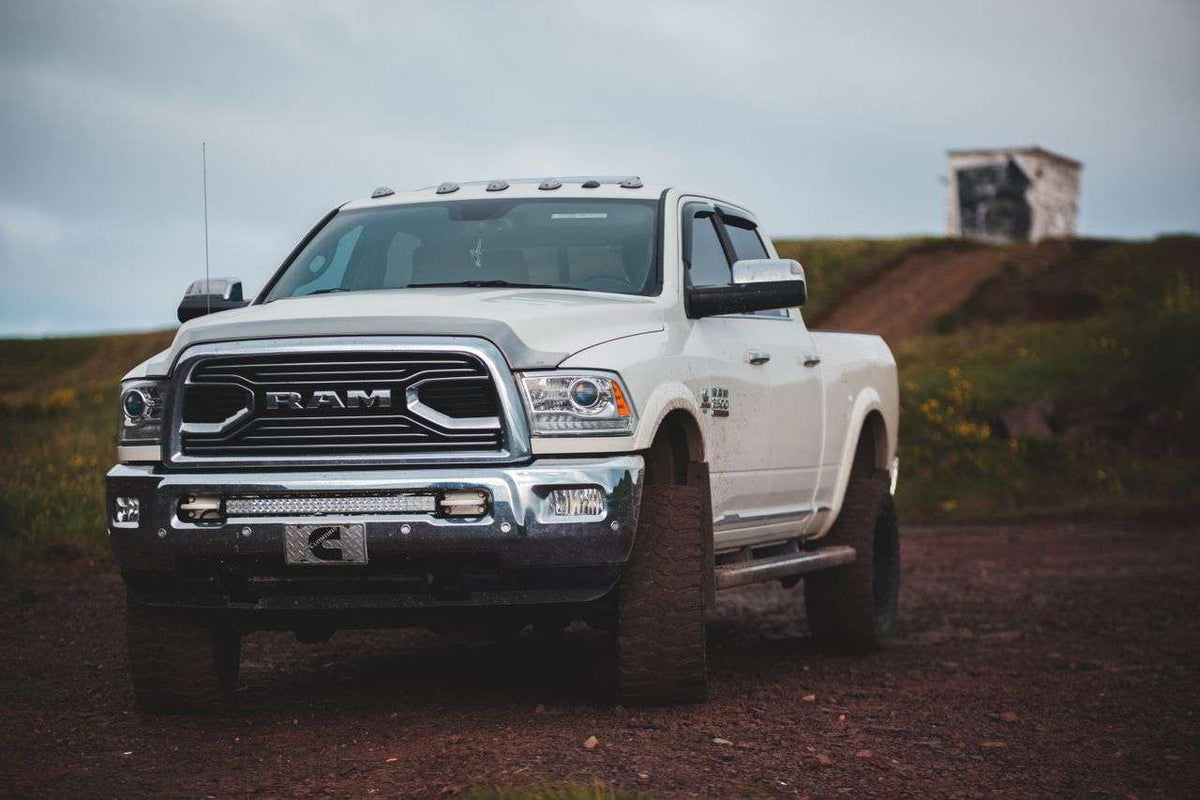
Deleting a 6.7 Cummins is one of the most common jobs in the diesel world, and for good reason. Done right, it clears out the emissions systems that cause the most downtime, the DPF regens, the EGR failures, the DEF warnings that drop the truck to a crawl. This walkthrough is here to help you do it yourself with confidence.
You will get the full picture of how the job goes, phase by phase, along with the do's and don'ts that keep it clean and the one rule you cannot break along the way.
The Quick Answer
A full 6.7 Cummins delete happens in a few phases that all have to be done together: pull the DPF and DEF exhaust hardware and fit a delete pipe, delete the EGR with block-off plates and a coolant reroute, then flash the ECM with a delete tune. Skip any one of them and the truck throws codes and drops into limp mode.
Plan on a full weekend, or roughly 4 to 8 hours depending on how handy you are. You do not need a lift, jack stands are fine, and the tuner handles the ECM flash without any dealer equipment. The single rule you cannot break is the last one. Never run the truck on the deleted hardware without flashing the matching tune.
|
Phase |
What happens |
Rough time |
|
DPF and DEF removal |
Factory exhaust and DEF hardware out, delete pipe in |
2 to 3 hours |
|
EGR delete |
Cooler and valve out, block-off plates and coolant reroute in |
2 to 3 hours |
|
ECM flash |
Delete tune loaded so the computer runs clean |
10 to 20 minutes |
What Gets Removed, and Why
Before you turn a wrench, here is what you are taking off and the headache each part causes. This is why owners delete in the first place.
-
The DPF, the diesel particulate filter, traps soot and forces regen cycles that waste fuel and clog over time.
-
The DEF and SCR system sprays urea fluid into the exhaust and brings the sensors, pump, and heater that throw the derate warnings.
-
The EGR, exhaust gas recirculation, routes hot exhaust back into the intake, where it bakes on carbon and cracks coolers.
All of it ties into the truck's computer as one emissions strategy. That is the reason the parts come off as a set and the tune has to cover the whole thing, which brings us to the rule that matters most.
What a Complete Kit Includes
The cleanest way to do this job is with a full kit built for your truck, so everything matches and nothing is missing when you are halfway under the truck. A complete 6.7 Cummins delete kit from Diesel Patriots comes with all of the following.
-
A tuner device with a rotary switch to change power levels, preloaded with custom tuning built for your VIN
-
A DPF and CAT delete pipe, stainless steel, that bolts in where the factory unit came out
-
A complete EGR delete kit with block-off plates, gaskets, and the coolant reroute
-
The DEF delete handled through the tune and hardware
-
The bypass cable on 2018 trucks, so the tuner can reach the ECM
-
An optional upgrade to a 4 inch or 5 inch full exhaust with or without a muffler
That is everything you need to do the job start to finish, and it comes in one box. The value of a matched bundle is that you are not chasing a missing gasket or the wrong-length pipe from three different vendors mid-install. When the whole kit is spec'd for your year, the parts fit each other and the tune fits the parts. Transmission tuning is built in as well, so the drivetrain is looked after alongside the power.
If you want help choosing between configurations, our rundown of the best delete kit for a 6.7 Cummins walks through what to look for.
The One Rule You Cannot Break
Every phase has to be finished together, and the tune is what ties it off. Here is why. The ECM is watching all those emissions parts through their sensors. The moment you pull the hardware, the computer sees the sensors reporting wrong or missing entirely, and it responds the only way it knows how, by throwing fault codes and dropping the truck into limp mode to protect itself.
The delete tune rewrites that programming so the ECM stops looking for the parts that are gone. Without it, a freshly deleted truck runs worse than a stock one. This is why a partial delete is not a shortcut, it is a truck full of warning lights. Hardware first, tune last, all in one job.
If you are still deciding which device to run, our guide to the best tuner for a 6.7 Cummins breaks down the options.
Step by Step: How the Delete Goes
Here is the whole job in order, with the things to watch for called out right where they matter. Your specific kit will have the exact bolt-by-bolt detail for your truck and year, so treat this as the roadmap that keeps you oriented.
Get set up safely. Park on level ground, let the engine cool completely, and disconnect both battery terminals. You are working around hot exhaust and electrical connectors, so do not rush this part. Do spray every exhaust and EGR bolt with penetrating oil the night before you start. Rust is the number one thing that turns a 4 hour job into an 8 hour one, so give it time to work.
Get the truck up on jack stands. You want clean access to the exhaust and undercarriage. No lift needed, stands are plenty.
Phase one, the exhaust. Remove the factory DPF, DEF, and SCR section, disconnecting the sensor wiring and unbolting the clamps and hangers. Fit the delete pipe in its place, reusing the factory hangers. Do label your sensor connectors as you unplug them, it costs a second each and saves you guessing on reassembly. Don't fully torque the pipe yet. Hang the whole section, check your clearance from the driveshaft and frame, then tighten it down.
Phase two, the EGR. Drain the coolant first, then pull the intake piping for access, remove the EGR cooler and valve, and fit the block-off plates with the coolant reroute so the circuit stays sealed. Don't leave the block-off plate gaskets half-seated. A loose plate means an exhaust leak and a job you have to come back and redo, so seat them properly and bolt down evenly.
Handle the 2018-and-newer bypass. If your truck is a 2018 or newer, plug in the bypass cable so the tuner can reach the ECM. Don't skip this on these trucks, without the cable the device simply will not connect.
Phase three, the flash. Load the delete tune with the tuner through the OBD-II port. This is the step that makes everything work. Do keep a battery charger on the truck while it flashes, a voltage drop mid-tune is one of the most common ways a flash goes wrong. Don't drive the truck for normal use until the flash is finished.
Clear and check. Wipe any stored codes with a scan tool and check your work before the truck goes back to normal duty.
Matching the whole kit to your exact year keeps this from turning into a fight with parts that do not fit. Diesel Patriots builds year-specific bundles for exactly this reason, so if you want the hardware and tune pre-matched and ready to bolt on, start with the right Ram Cummins delete kit for your truck before you begin.
Does Your Model Year Change the Job?
Yes, and it is worth knowing where your truck falls before you start, because Ram changed the emissions setup and the computer security more than once across the 6.7 Cummins run. The hardware job is broadly the same, but the tuning side gets tougher on the newer trucks.
|
Year range |
What is different |
What it means for the job |
|
2007.5 to 2012 |
Simplest setup, no DEF on the earliest trucks |
Easiest to tune, most forgiving computer |
|
2013 to 2017 |
Full DPF, EGR, and DEF all present |
Straightforward, widest support |
|
2018 |
Security Gateway added |
Needs a bypass cable to connect the tuner |
|
2019 to 2024 |
Encrypted computer, tighter each year |
Often needs an unlock or the right connected tuner |
The older trucks, 2007.5 through 2017, are the friendly ones. The computer is easier to work with and almost any reputable kit and tuner will handle them. The 2018 model year is where the first real wrinkle shows up, when Ram added the Security Gateway that blocks the tuner from the OBD-II port unless you run a bypass cable, which is why a proper kit for that year includes one.
From 2019 on, the trucks carry encrypted computers that fight modification, and the security only got tighter through 2024. Deleting these is very doable, but it takes the right tools and often an unlock step, so exact-year compatibility matters more than ever. On these newer trucks especially, confirm your kit and tuner are built for your specific year before you buy, since the wrong box simply will not connect.

How to Know It Worked
Once the hardware is off and the tune is loaded, verify the job before you trust it under load. A clean delete shows these signs.
-
No check engine light and no stored emissions codes after the flash
-
No limp mode or derate during normal driving or towing
-
No more regen cycles and no DEF warnings on the dash
-
Lower exhaust temps under load, often noticeably cooler on grades
-
A clean idle and the added power from the tune coming through
If a code comes back or the truck still derates, that usually points to the tune not matching the hardware or a step missed along the way. That is the exact headache a matched kit avoids. If you hit a snag or have a question partway through, you can always talk to our experts and get a straight answer before you go further.
The Bottom Line
A 6.7 Cummins delete is a real job, but it is a manageable one for anyone comfortable with their own wrench work. Respect the phases, keep them together, finish with the tune, and verify the truck runs clean before you put it back to work. Get a kit matched to your exact year and the guesswork mostly disappears, and you trade a stack of emissions headaches for a truck that just runs.
Frequently Asked Questions
How long does it take to delete a 6.7 Cummins?
Plan on 4 to 8 hours for a DIY installer with the right tools, depending on your experience and how cooperative the bolts are. The DPF and DEF removal takes 2 to 3 hours, the EGR delete another 2 to 3, and the ECM flash only 10 to 20 minutes.
Can I delete a 6.7 Cummins myself?
Yes, it is a DIY-friendly job for anyone comfortable with their own mechanical work. You do not need a lift, jack stands are enough, and the tuner handles the ECM flash without dealer equipment. A full kit with a pre-loaded tune removes most of the guesswork.
Do I need a tune to delete a 6.7 Cummins?
Absolutely. Without an ECM flash, removing the DPF, DEF, and EGR hardware triggers fault codes and puts the truck in limp mode immediately. The tune tells the computer the hardware is gone and reconfigures fueling, boost, and EGT targets. Never run a mechanical delete without it.
What parts do I need for a full 6.7 Cummins delete?
A DPF and CAT delete pipe, an EGR delete kit with block-off plates and coolant reroute, the DEF delete, and a delete tuner loaded with tune files for your exact year, plus the bypass cable on 2018 and newer trucks. A full bundle matched to your model year includes all of it in one box.
Why does my 2018 Ram need a bypass cable?
Ram added tighter ECM security starting in 2018, and the bypass cable lets the tuner connect to complete the delete. Trucks from 2013 to 2017 do not need it. A proper kit for these years includes the cable.